
Valve Capabilities
Our Relief Valve, Breather Valve, and Flame Arrester capabilities also cover workshop refurbishment from 1/2" - 16", with the testing facilities use of water, nitrogen, or air.
Relief Valve
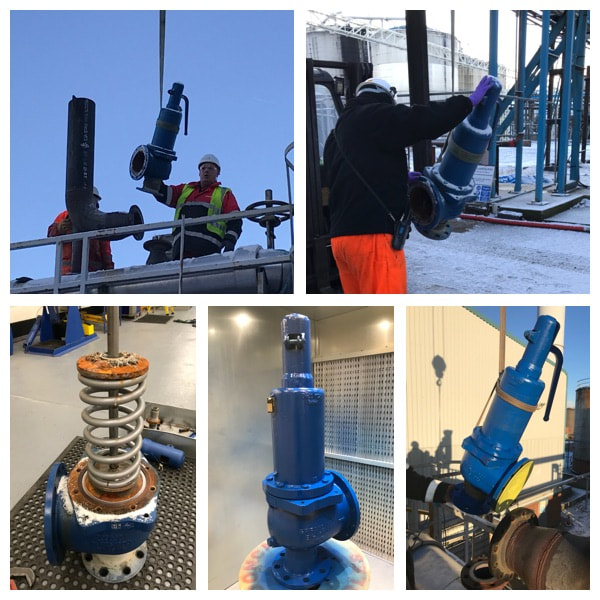
Relief Valves are safety designed to protect systems from overpressure. When the pressure in a system exceeds a predefined limit the Relief Valve automatically opens to release excess pressure, preventing damage to equipment, pipes, or vessels. Once the pressure returns to a safe level, the valve closes again.
There are different types of Relief Valves, such as:
Typically used in oil & gas, chemical processing, petrochemical plants, power generation, and pharmaceutical manufacturing.
There are different types of Relief Valves, such as:
- Spring-loaded: Uses a spring to keep the valve closed until the pressure surpasses the set limit.
- Pilot-operated: Uses system pressure to control the valve's opening and closing.
Typically used in oil & gas, chemical processing, petrochemical plants, power generation, and pharmaceutical manufacturing.
Breather Valves
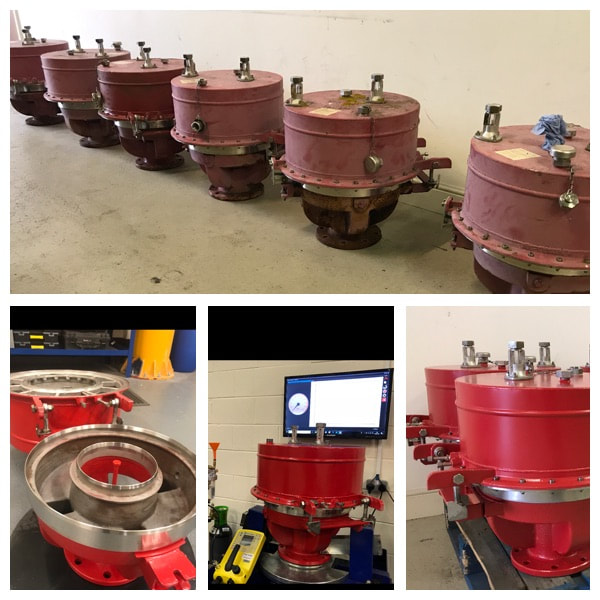
Breather Valves are used to control or regulate the flow of air or gasses in systems operating under vacuum conditions (below atmospheric pressure). These valves either allow or restrict the flow of air of gas to to maintain the desired vacuum level or to protect the equipment from excessive vacuum, which can cause damage.
Breather Valves are critical in industries like packaging, semiconductor manufacturing and scientific research, where precise vacuum control is essential.
Commonly found in pharmaceutical, biotechnology, food processing, semiconductor, and laboratory environments.
Breather Valves are critical in industries like packaging, semiconductor manufacturing and scientific research, where precise vacuum control is essential.
Commonly found in pharmaceutical, biotechnology, food processing, semiconductor, and laboratory environments.
Flame Arrestors
Flame Arrestors are safety devices that are designed to stop the spread of flames in a system while allowing the flow of gases or vapours. They work by cooling the flame front as it passes through a metal mesh or perforated plate, dissipating the heat and extinguishing the flame before it can reach potentially flammable areas.
Flame Arrestors are typically used in industries handling flammable gases or liquids. such as:
Primarily found in oil & gas, chemical storage facilities, refineries, biogas plants, and fuel distribution sites.
Flame Arrestors are typically used in industries handling flammable gases or liquids. such as:
- Oil and Gas: Prevent explosions in pipelines or storage tank.
- Chemical Processing: Safeguard systems containing volatile materials.
- Storage Tanks & Vents: Prevent external flames from igniting internal vapours.
Primarily found in oil & gas, chemical storage facilities, refineries, biogas plants, and fuel distribution sites.
Control Valves
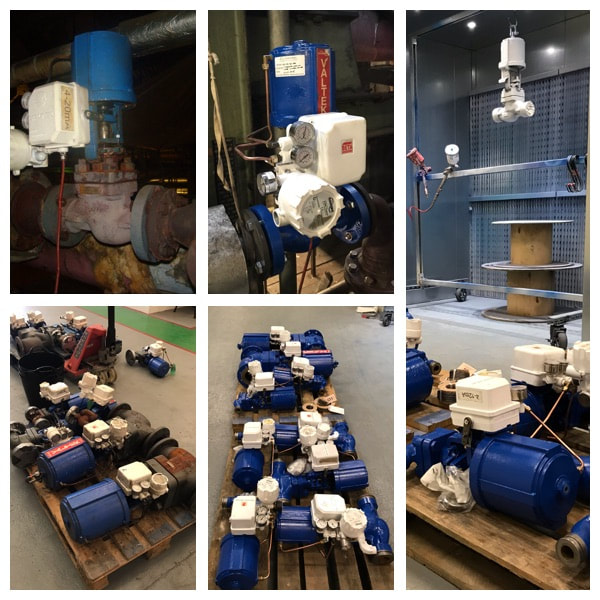
Control Valves are devices used in industrial system to regulate the flow of fluids, such as gases, liquids, or steam. They adjust flow, pressure, or temperature by opening or closing in response to signals from a control system. The main parts of a control valve include the valve body, actuator and positioner.
Widely used across oil & gas, chemical, power plants, water treatment, HVAC systems, pharmaceutical, and manufacturing industries.
- Valve body: Contains the fluid and directs its flow.
- Actuator: Moves the valve's components (like the valve stem) to control flow.
- Positioner: Ensures the valve reaches the correct position as dictated by the control system.
Widely used across oil & gas, chemical, power plants, water treatment, HVAC systems, pharmaceutical, and manufacturing industries.
Manual Valves
Manual Valves are simple mechanical devices used to control the flow of fluids in a system by requiring direct human operation. They are operated by turning a handwheel, lever, or other mechanism to open, close, or throttle the flow of liquid, gas, or steam.
There are various types of manual valves, including:
- Gate Valves: Used to fully open or close the flow in a pipeline.
- Ball Valves: Rotate a ball with a hole through it to control flow, offering quick on/off operation.
- Globe Valves: Provide better control of flow for throttling purposes.
- Butterfly Valve: Use a rotating disc to control flow, often for larger systems.